
Where to Spot Eagles, Elk, and Moose Near Idaho Falls This January
Idaho Falls in January is famous for two things: biting cold and breathtaking beauty. While many people retreat indoors, local photographers and nature lovers know that this is actually the best month of the year for wildlife viewing.
Deep snow in the high country forces big game animals down into the valleys, and frozen lakes concentrate waterfowl into specific pockets of open water. If you have a pair of binoculars and a tank of gas, you can go on a "Winter Safari" without leaving Bonneville County.
Here is your guide to spotting our most iconic winter residents this month.
1. The Eagle Run (South of Idaho Falls)
You don’t have to travel to Alaska to see Bald Eagles. In January, they are practically in our backyard.
Where to go: Take the scenic drive south along the Old Butte Highway or River Road towards Shelley and Firth.
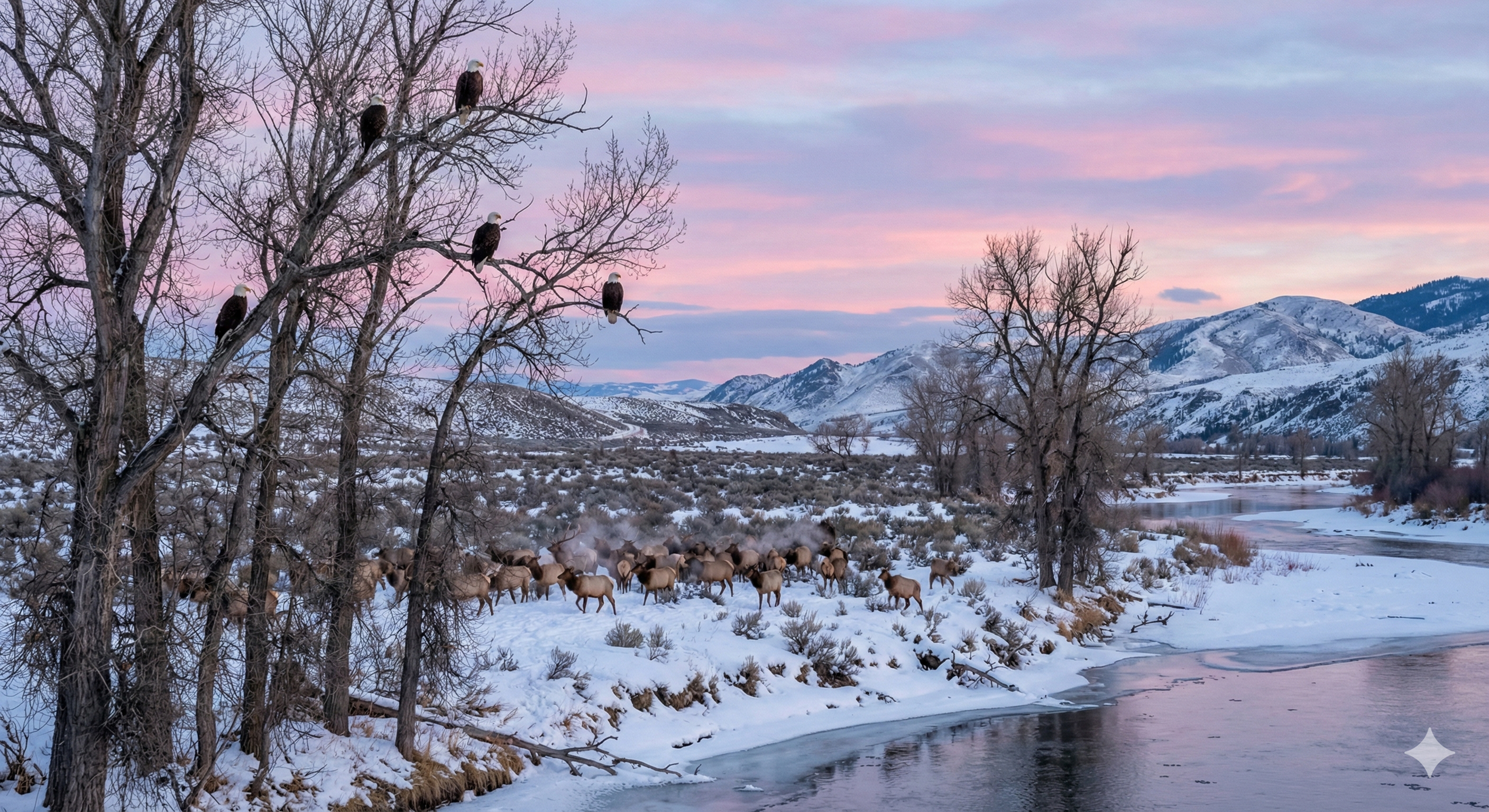
What to look for: Keep your eyes peeled on the massive cottonwood trees that line the Snake River. On a good day, it is not uncommon to see dozens of Bald Eagles perched in the bare branches, scanning the water for fish.
-
Pro Tip: Look for the "white golf balls" in the trees. From a distance, a Bald Eagle's head looks like a bright white sphere against the dark branches.
2. The "Swan Valley" Drive
There is a reason it’s called Swan Valley. While the Trumpeter Swans are beautiful, they are also loud—you will often hear their horn-like honking before you see them.
Where to go: Drive East on Highway 26 toward Swan Valley (about 45 minutes from Idaho Falls).
What to look for: As you wind along the South Fork of the Snake River, look for the stark white contrast of Trumpeter Swans floating on the dark, ice-cold water.
-
The Best Spot: Pull over safely at the designated turnout near the Fall Creek Falls area or the bridge as you enter the valley. Seeing hundreds of these massive birds against the snowy backdrop is a bucket-list Idaho experience.
3. The Elk Migration at Tex Creek
This is the heavy hitter of winter wildlife viewing. The Tex Creek Wildlife Management Area (WMA) is critical winter range for thousands of elk, moose, and mule deer.
Where to go: Head east toward Ririe Reservoir and the Tex Creek area. (Note: Many interior roads are closed to protect the animals, so you will be viewing from the main perimeter roads).
What to look for: As the snow piles up in the high country, massive herds of elk move down to the "lower" elevation (which is still pretty high!). It is common to see herds numbering in the hundreds moving across the rolling white hills.
-
Safety Note: If you spot moose, stay in your car. They are grumpy in the winter and can move surprisingly fast in deep snow.
4. The Neighborhood Invasion (Ammon Foothills)
You don’t technically need to leave the house for this one. If you live in the foothills of Ammon (especially near the Comore Loma or Woodland Hills areas), the wildlife comes to you.
What to look for: Mule deer. Everywhere. They are cute, but they are also hungry. This is the time of year when they treat your expensive landscaping like an all-you-can-eat salad bar.
-
Local Etiquette: Drive slowly on Sunnyside Road and Crowley Road at dusk. The deer blend in perfectly with the grey slush on the side of the road and have zero traffic sense.
📷 A Note on Ethics
Winter is a survival situation for these animals. They are burning limited calories to stay warm.
-
Do not approach them.
-
Do not make them run.
-
Do not feed them. (It can actually kill them—their digestive systems can't handle corn or apples in winter).
Grab a telephoto lens, stay warm in your heated seats, and enjoy the show from a distance!